
What To Do During a Plumbing Emergency
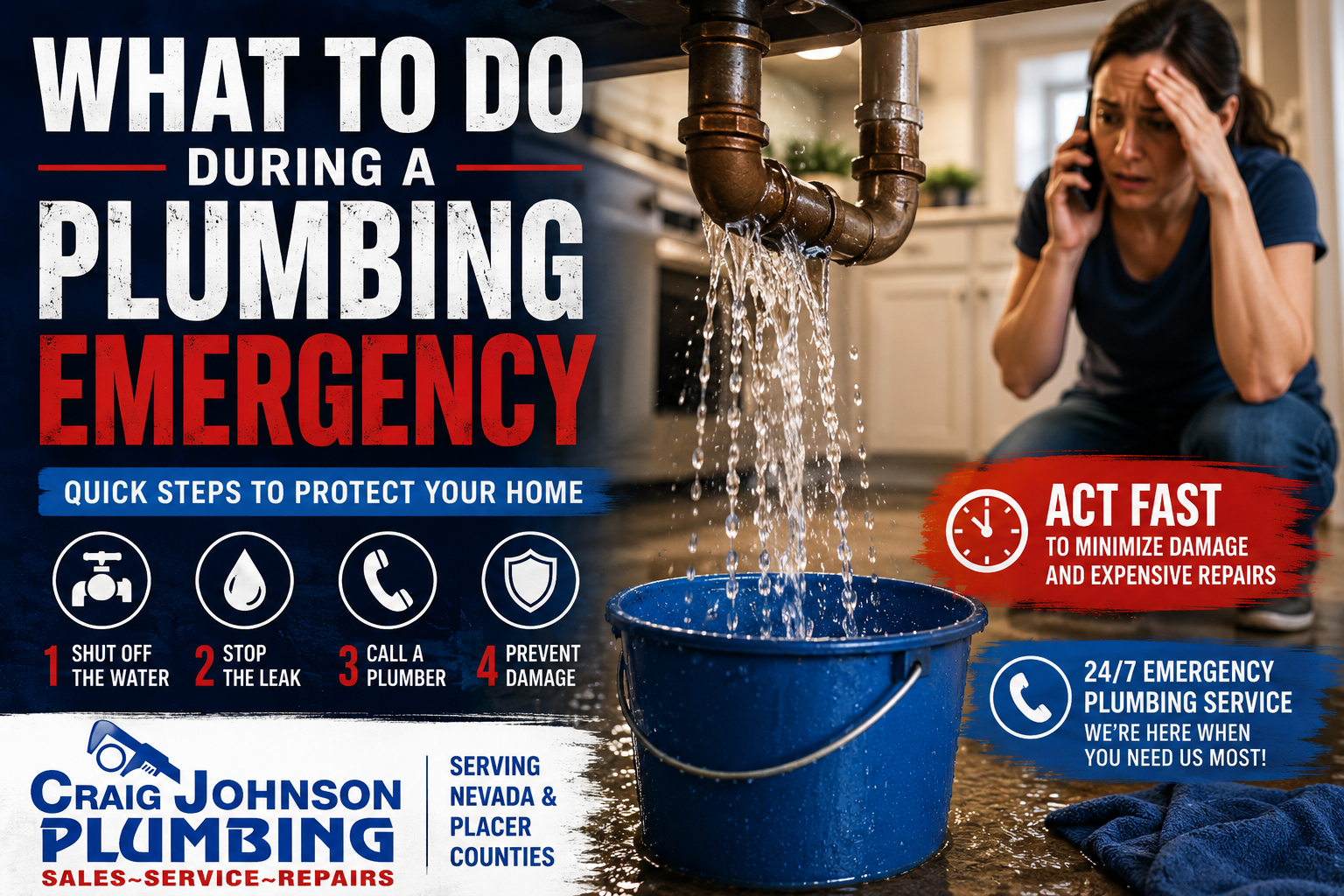
What To Do During a Plumbing Emergency
Plumbing emergencies never happen at a convenient time. Whether it’s a burst pipe, overflowing toilet, sewer backup, or a major leak, knowing what to do in those first few minutes can help prevent serious water damage and costly repairs.
At Craig Johnson Plumbing, we’ve seen firsthand how quickly a small plumbing problem can turn into a major mess. Here are some important steps homeowners can take during a plumbing emergency.
1. Shut Off the Water
The first thing to do during any major plumbing leak is locate and shut off the water supply.
For smaller issues, like a leaking toilet or faucet, there is usually a shut-off valve nearby. For larger emergencies, you may need to shut off the home’s main water valve.
Knowing where your main water shut off is located before an emergency happens can save valuable time and prevent flooding.
2. Turn Off the Water Heater
If you’ve shut off your main water supply, it’s also a good idea to turn off your water heater. This helps protect the unit from damage caused by pressure changes or overheating.
For gas water heaters, turn the gas valve to the “pilot” setting. For electric units, switch off the breaker.
3. Stop Using Plumbing Fixtures
If you suspect a sewer backup or clogged main line, avoid using sinks, showers, toilets, or appliances connected to the plumbing system. Continuing to use water can make the backup worse and cause sewage to overflow into the home.
4. Contain the Water if Possible
Use towels, buckets, or pans to help contain leaking water until a plumber arrives. Moving furniture, rugs, and valuables away from the affected area can also help minimize damage.
If water is near electrical outlets or appliances, avoid the area and use caution.
5. Don’t Ignore Small Warning Signs
Many plumbing emergencies start with small symptoms:
• Slow drains
• Gurgling toilets
• Sewer odors
• Water stains
• Unusually high water bills
• Dripping pipes
Addressing these issues early can often prevent a larger and more expensive repair later.
6. Call a Professional Plumber
Some plumbing problems require immediate professional attention. Burst pipes, sewer backups, gas leaks, and major water leaks should always be handled by a licensed plumber.
Professional equipment like sewer cameras, leak detection tools, and hydro jetters help diagnose and solve problems properly the first time.
Common Plumbing Emergencies We See
• Burst water lines
• Sewer backups
• Clogged drains
• Water heater failures
• Gas leaks
• Overflowing toilets
• Broken sewer lines
• Outdoor water leaks
Prevent Plumbing Emergencies Before They Start
Routine maintenance and inspections can help catch plumbing issues before they become emergencies. Sewer camera inspections, drain cleaning, water heater maintenance, and leak checks all help keep your plumbing system running smoothly.
When plumbing problems happen, acting quickly can make all the difference.
At Craig Johnson Plumbing, we’re proud to help Nevada & Placer County homeowners with reliable plumbing, drain cleaning, sewer repairs, gas lines, hydro jetting, and emergency plumbing services.