Site updates
Re-routing water lines
Tree roots are a common reason plumbers need to re-route water lines, especially when roots crush, lift, or repeatedly damage underground piping. Here’s an overview of how it’s usually handled in the field. 🔧🌳
Roots naturally grow toward moisture and nutrients, so even tiny leaks attract them. Over time they can:
-Crack PVC, copper, or poly water lines
-Push pipes out of alignment
-Cause repeated leaks
-Collapse older lines
Once roots are heavily established, spot repairs often fail, which is why rerouting is common.
Typical Water Line Re-Route Process
1. Locate the Existing Line
-Use a pipe locator or tracer wire
-Identify where roots are impacting the pipe
-Mark utilities before digging (811)
2. Excavate Around the Problem Area
-Dig test holes to expose the damaged section
-Remove as many roots as possible
-Determine if repair or reroute is better
3. Choose a New Route
-Route around the tree
-Run along the side of the property
-Install through a clean trench away from root growth
4. Install New Water Line
5. Pressure Test & Backfill
-Pressure test for leaks
-Bed pipe in sand
-Backfill and compact soil
If you are having issues with your water lines and believe that they need to be re-routed, please give us a call and we are always happy to help!
Are you looking to install a new gas line?
Trenching for a gas line is one of those jobs that looks simple, but can go sideways fast if it’s not done right! There are a few steps you need to take before trenching just anywhere.
Safety First:
It is mandatory in the US to call 811 before you dig. They will reach out to all the utility companies to mark their lines so make a clear digging area.
Permits and inspections are usually required.
Make sure to have a licensed installer for gas piping.
Pressure test needs to be done before backfilling.
No open flame, no shortcuts. Gas work isn’t DIY friendly!
Trench Depth:
Natural gas (poly/PE underground pipe): 12-18″ minimum cover
Metal pipe underground: 18″-24″ minimum cover
Sleeve under driveways/footpaths: required in many areas
Tracer wire: required for all PE gas lines
Materials Commonly Used:
Poly gas pipe underground
Anodeless risers at transitions to above ground
Tracer wire and warning tape.
Sand or fine soil bedding (native soil works), avoid rocks.
Overall, trenching for a gas line and installing a gas line isn’t for everyone. It is very important to do this the correct way to prevent any harm or danger. If you’re interested in re-routing or adding a new gas line, give us a call and we are always happy to help!
Yearly Tankless Water Heater Service
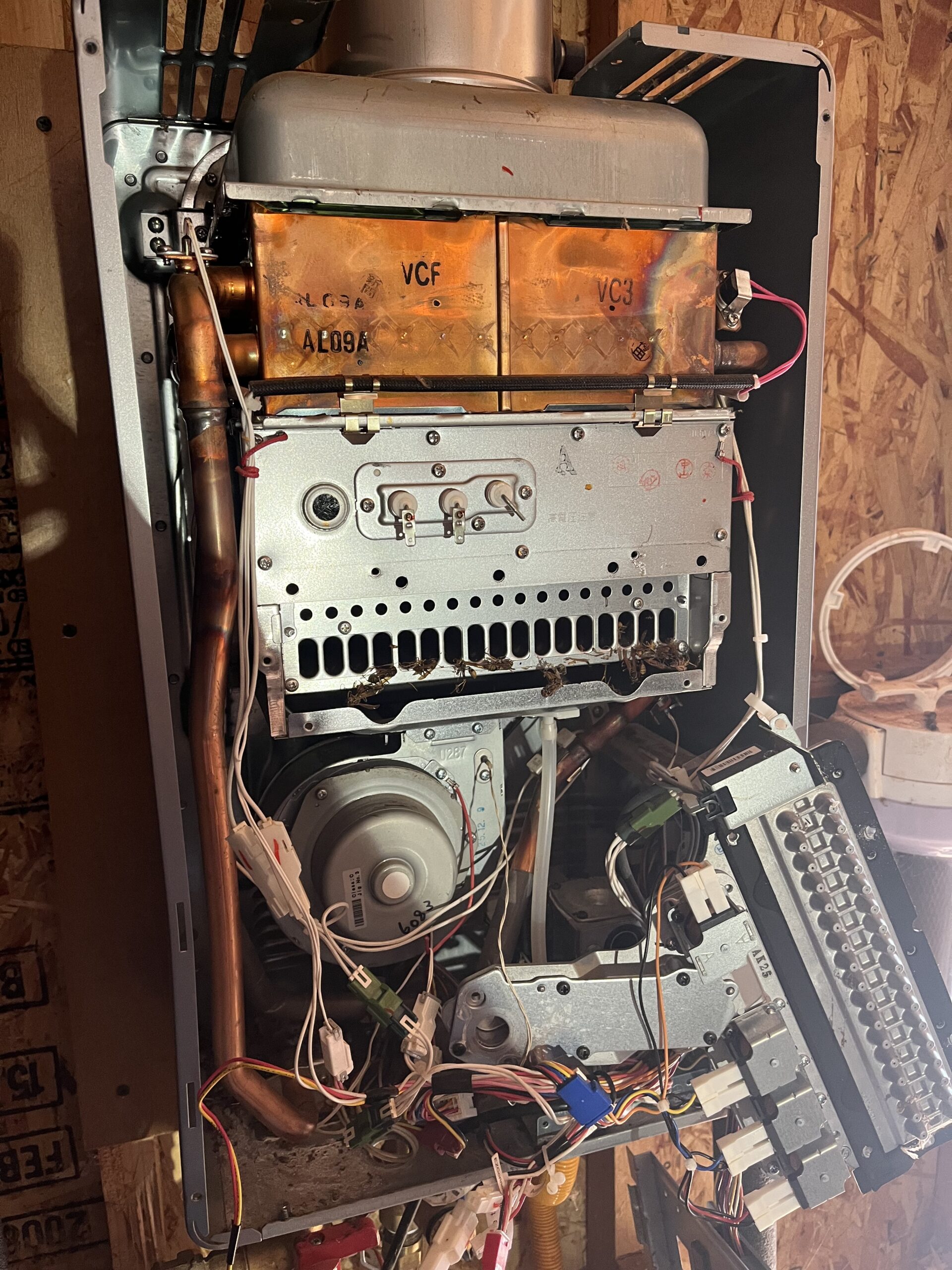
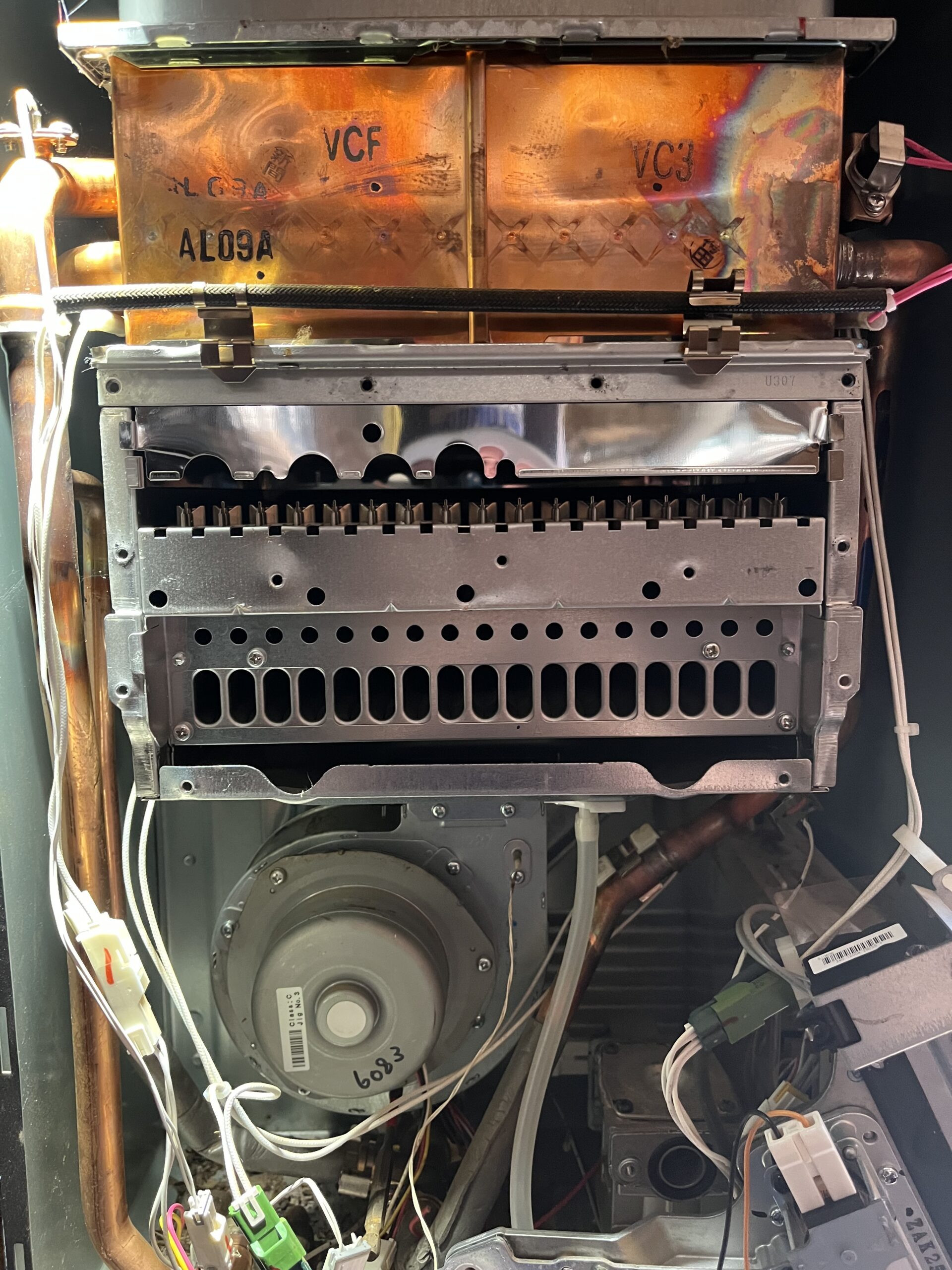
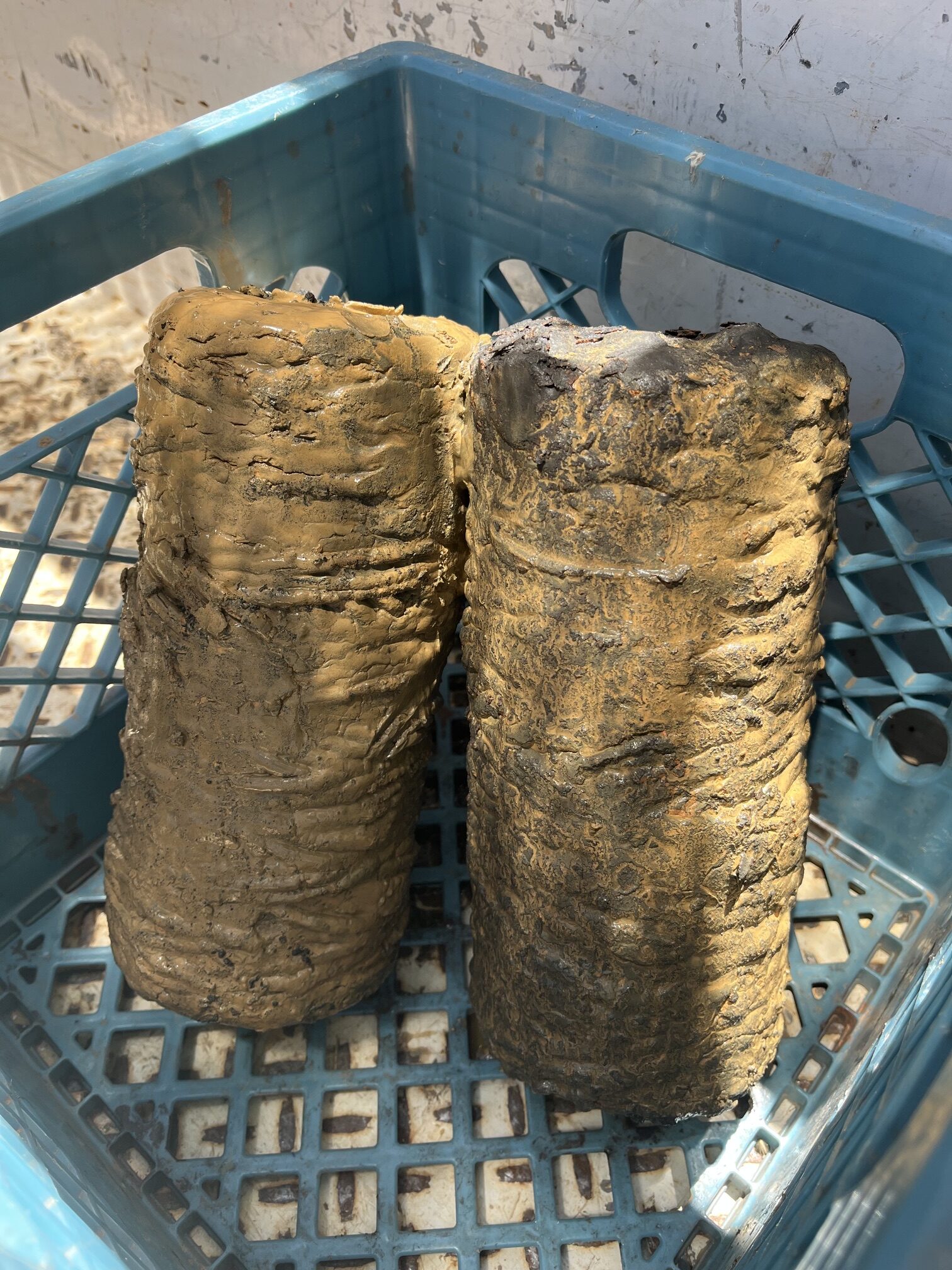
Tankless water heaters require yearly cleaning (descaling/flush) is a big deal for performance and lifespan – especially if you’ve got hard water. This photo shows a cold inlet water filter clogged due to lack of maintenance. If you haven’t had your tankless water heater serviced within the last year, give us a call!
Food Waste / Garbage Disposal
Food waste occurs when edible food is discarded which often happens during cooking or can even be due to overbuying, improper storage or expiration.
Garbage disposals are very convenient for several reasons:
- Convenience: It makes cleaning up after meals quicker by allowing you to easily dispose of minimal food scraps
- Reduces Trash: Using a garbage disposal helps reduce the amount of waste going into landfills, as organic food scraps are ground up and sent to sewage systems
- Prevents clogging: In some cases, using a garbage disposal helps keep drains clear by breaking down food particles before they can clog pipes
Just remember don’t add any grease or stringy food materials into your garbage disposal such as celery and potato skins. You want to keep your food waste going into your disposal at a minimum to keep everything flowing properly. Instead of putting all your food waste into the garbage disposal or the trash, put the majority of your big food waste into your waste bin for waste management or keep them to feed your animals!
Water Heater Upgrade
Upgrading your water heater to a tankless is a great move, especially if you’re looking to save on energy and space.
We recently just upgraded a 50 gallon traditional water heater to a more efficient, tankless water heater. The demand on this home required 2 Rinnai tankless water heaters to keep up with 5 bathrooms. Rinnai tankless water heaters are known for their efficiency and ability to provide endless hot water, which is a huge plus especially for a larger home. The 2 tankless are linked together and run simultaneously without running out of hot water.
I mean look at all of this extra space! If you’re interested in upgrading your water heater, please call Craig Johnson Plumbing!
Flame Color Matters
For those of you who have a gas stove weather its natural gas or liquid propane, it’s important to know the correct flame color.
A gas flame should burn blue. This means that the combustion process is working as it should and oxygen is reacting with the gas in a safe way. Occasionally, there may be a little yellow in the flame tip, but as long as it’s mainly blue, we are good!
Have you ever heard a popping sound when lighting your stove? This could indicate that there is some debris present in combustion process, and this can cause the flame to have some yellow and orange color. Once the debris has burned off, your flame should return back to blue.
When the flame is continuously burning yellow and orange it means there is an issue, and the combustion is not safe. If this is happening with your stove, make sure to call Craig Johnson Plumbing and we will come help before a serious issue occurs.
Merry Christmas & Happy New Year
We hope everyone had a Merry Christmas and got to spend time with their loved ones. With the new year coming up we are back to voting for Nevada County’s “Best Of” which starts on January 7th. You are able to vote once per day until they close the registration on January 25th. We are encouraging you all to vote for your favorites of Nevada County!
https://www.theunion.com/magazines/best_of_nevada_county/
Craig Johnson Plumbing would also like to thank you all for another great year and always trusting in us to fix your plumbing needs! Remember, no job is too big, and no job is too small!
Water Heaters during the cold weather
Did you realize that with the colder weather water heaters generally work harder because of the incoming water being colder which requires the water heater to use more energy to reach desired temperature.
To make sure you maintain hot water through the winter and the holidays it’s important to stay up to date on maintenance.
Flushing and maintaining your water heater are recommended to be done every year. This is done on both, tankless and traditional tank water heaters. While we are flushing the water heater, we are also making sure that everything is working properly.
Insulating your water heater could help minimize heat loss.
Water heaters last on average 10-12 years. If your water heater is on the older side, has started leaking either at the top or the bottom, or is no longer providing hot water it may indicate that it’s time for a replacement. Tankless water heaters are more efficient as they are on demand heaters.
If you are experiencing any issues, please give us a call and we will troubleshoot any issues that you are having. There is nothing more inconvenient than running out of hot water on a cold day, so don’t wait!